The Treasury Department announced that it will cease making $1 coins after minting one portraying our 20th president, James A. Garfield. Of course, his successor via assassination, Chester A. Arthur will not enjoy the honor of a presidential coin. Perhaps conspiracy theorists will
speculate that this is some sort of payback for Arthur's complicity in the questions raised over our current president's citizenship. But the simple fact is Americans don't use the $1 coin and it has no place in our pockets, change cups, and cash registers. I admit I am guilty of this myself. The metallic images of Presidents Washington, Jefferson, and Hayes have a permanent residence in my desk draw with a commemorative token from Buffalo Bill's grave in Golden, Colorado and some sort of Soviet coin with Lenin's image and the dates 1870-1970 that my uncle smuggled back from a 1980s trip to the USSR (and yes, that was during the height of the "spy dust" years, if one recalls that Cold War news nugget). They haven't even made their way to my modest coin collection to cozy up to Susan B. Anthony, yet another $1 coin fiasco. My Irish grandmother made sure I received a freshly minted one as my interest history was already evident in 1979. I added it to my currency collection which then consisted of a couple of buffalo back
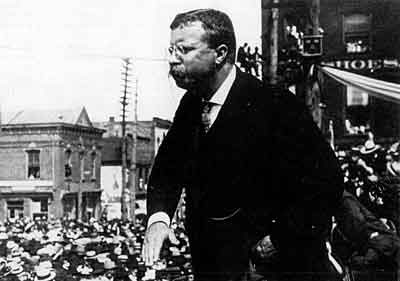
nickels and a $2 bill that I received on my birthday and never spent. I still have the $2 bill and the Susan B. Anthony dollar, and right there you can see I have taken $6 whole dollars permanently out of circulation. As a tax payer I am glad that we will no longer waste money creating a product that the public-at-large does not want or use. The historian in me, however, wishes they would have realized this a bit later, after coins bearing the images of the Gilded Age presidents could be minted and, to use a not quite appropriate term, circulated. Perhaps it would have stimulated some interest among some Americans in the Gilded Age and its bearded and mustached chief executives. Theodore Roosevelt would have been a good breaking point. After all, I would think Mount Rushmore would more than compensate for his not being on a coin.
A Blog Dedicated to the Study of the Gilded Age, Progressive Era, and history of the environment.
Tuesday, December 20, 2011
Sunday, December 18, 2011
Decision Points
Theodore Roosevelt created the modern presidential autobiography. He stressed his accomplishments, minimized his setbacks, and offered insight to his decisions. In the years after 1913 it might have seemed Roosevelt's reflection on his life and presidency was a product of his own prolific authorial nature and not a new trend for former chief executives. William Howard Taft did not want to relive his unhappy four years in office, nor did he have a history of writing. Stricken with a stroke Woodrow Wilson could not write an autobiography. What a shame! His sense of history, writing ability, and professorial bent, could have produced a standout among presidential memoirs, even if it would have been burdened by his self-righteousness. Warren Harding died in office, but one wonders if he would have written one had he lived. Calvin Coolidge revived the memoir,
although it was not very informative. I remember reading Allen Nevins once wondered aloud why on earth Coolidge even bothered to write it. Herbert Hoover left a much more detailed, informative, and lengthy contribution. In this highly defensive work, Hoover sought to vindicate his reputation and offer his version of history. He divided the depression down to a number of smaller segments that he dealt with. Throughout he stuck to the narrative that he thoroughly understood what was going on and acted appropriately. Obviously, it all went to hell with the New Deal Democrats. Thereafter, all presidents who survived their terms wrote autobiographies or memoirs, mostly with the help of ghost writers. Each one has its own character and offers an insight to the presidents who wrote them. For example, Harry Truman's is homey, Dwight Eisenhower's is professional if bland, Nixon's is defensive and consumed by Watergate, and Clinton's is verbose.
Like his predecessors George W. Bush seeks to minimize his defeats and accent his Triumphs in his Decision Points. Skipping detailed discussion of individual policy, I will only offer a couple of general comments on the structure of the book.
1. I sensed that there were two myths Bush consciously sought to confront without mentinoing. First, Dick Cheney's name appears sporadically in the policy discussions. In other words, the Vice President does not appear to exert the same level of influence in Bush's account of his years in office as the media depicted. Second, it was largely reported during his administration that the president avoided internal discussion and debate. In his memoir, Bush recounts many debates within the administration and with allies on important policy matters. Of course, the gate swings both ways. If the president consulted many advisors then they must also take some of the blame for failed policies.
2. The organization of the book works well. It is thematic, not chronological. Nevertheless, I was disappointed that there was no discussion on environmental policies. No one is going to rank Bush as a great environmental president, but that still doesn't mean that Clear Skies, the protected zone in the Pacific, emissions standards, Global Warming, etc., were not worth more mention.
3. I liked the sense of humor. There are many serious topics and having a little humor (largely absent in most other presidential autobiographies) helps to cut some of Bush's defensiveness.
although it was not very informative. I remember reading Allen Nevins once wondered aloud why on earth Coolidge even bothered to write it. Herbert Hoover left a much more detailed, informative, and lengthy contribution. In this highly defensive work, Hoover sought to vindicate his reputation and offer his version of history. He divided the depression down to a number of smaller segments that he dealt with. Throughout he stuck to the narrative that he thoroughly understood what was going on and acted appropriately. Obviously, it all went to hell with the New Deal Democrats. Thereafter, all presidents who survived their terms wrote autobiographies or memoirs, mostly with the help of ghost writers. Each one has its own character and offers an insight to the presidents who wrote them. For example, Harry Truman's is homey, Dwight Eisenhower's is professional if bland, Nixon's is defensive and consumed by Watergate, and Clinton's is verbose.
Like his predecessors George W. Bush seeks to minimize his defeats and accent his Triumphs in his Decision Points. Skipping detailed discussion of individual policy, I will only offer a couple of general comments on the structure of the book.
1. I sensed that there were two myths Bush consciously sought to confront without mentinoing. First, Dick Cheney's name appears sporadically in the policy discussions. In other words, the Vice President does not appear to exert the same level of influence in Bush's account of his years in office as the media depicted. Second, it was largely reported during his administration that the president avoided internal discussion and debate. In his memoir, Bush recounts many debates within the administration and with allies on important policy matters. Of course, the gate swings both ways. If the president consulted many advisors then they must also take some of the blame for failed policies.
2. The organization of the book works well. It is thematic, not chronological. Nevertheless, I was disappointed that there was no discussion on environmental policies. No one is going to rank Bush as a great environmental president, but that still doesn't mean that Clear Skies, the protected zone in the Pacific, emissions standards, Global Warming, etc., were not worth more mention.
3. I liked the sense of humor. There are many serious topics and having a little humor (largely absent in most other presidential autobiographies) helps to cut some of Bush's defensiveness.
Tuesday, December 6, 2011
The Nature of New York
In my "The Ides" posting I noted how good intentions can sometimes boomerang with devastating effects. One example is an 1879 New York State law that required all apartment rooms to have a window. The idea behind the law was to bring light and fresh air to the overcrowded city tenements. This good sounding law had the unintended consequence of inspiring landlords to construct the infamous "dumbbell" apartment design (see picture to right). This odious
construction only made the problem worse as the windows in the "air shafts" between the buildings filled with rotting garbage and refuse. Instead or bringing fresh air and light, this law ironically created dank apartments infused with noxious fumes. I learned about this law in David Stradling's The Nature of New York: An Environmental History of the Empire State (Cornell, 2010).
As Stradling demonstrates, New York state played a pivotal role in the history of the American environment. Just to name some of the most important events and ideas emanating from the Empire State that inspired the nation: the Erie Canal, Niagara Falls tourism, Central Park, Adirondack State Park, Levittown, and Love Canal. Important individuals such as James Fenimore Cooper, the Hudson River School, the Roosevelts, Robert Marshall, and Robert Moses, to name a few, came from New York but impacted attitudes and policies throughout the United States. Being so focused on William Hornaday, I would argue that Stradling could have emphasized the role of the New York Zoological Park (a.k.a Bronx Zoo) in revolutionizing the concept of the zoo much more than he did, but I admit this falls in the category of basing criticism on how I might have written the book which is not always fair.
There are many more common environmental issues in New York State that could be used to make comparisons to other localities, states, and systems. Examples include, How to supply cities with water? Where to build infrastructure? Who should be held responsible for misdeeds and damage that harms other people? How to adapt to changes in the environment? What is the difference between genuine natural space and managed space? Throw in NIMBY, polluters, and larger trends like the decline of agriculture or the rise of the urban population and this book speaks across the Empire State's borders.
I really enjoyed The Nature of New York, especially because Stradling gives a lot of attention to the urban environment. He successfully argues that use of urban space is as legitimate topic for environmental history as forests, mountains, prairies, and tidal lands. New York City's pioneering 1916 zoning law stood out for me. I was surprised it took so long for such a code, and thought it more than coincidental that it was implemented only 4 years before the census revealed that the population of the country was equally divided between urban and rural dwellers. It is almost as if cities only then earned some respect as more than a dumping ground. Second, I just about forgot how much I enjoyed place histories. Whether it is a discussion on the history of the environment or politics, I do so enjoy this type of study.
construction only made the problem worse as the windows in the "air shafts" between the buildings filled with rotting garbage and refuse. Instead or bringing fresh air and light, this law ironically created dank apartments infused with noxious fumes. I learned about this law in David Stradling's The Nature of New York: An Environmental History of the Empire State (Cornell, 2010).
As Stradling demonstrates, New York state played a pivotal role in the history of the American environment. Just to name some of the most important events and ideas emanating from the Empire State that inspired the nation: the Erie Canal, Niagara Falls tourism, Central Park, Adirondack State Park, Levittown, and Love Canal. Important individuals such as James Fenimore Cooper, the Hudson River School, the Roosevelts, Robert Marshall, and Robert Moses, to name a few, came from New York but impacted attitudes and policies throughout the United States. Being so focused on William Hornaday, I would argue that Stradling could have emphasized the role of the New York Zoological Park (a.k.a Bronx Zoo) in revolutionizing the concept of the zoo much more than he did, but I admit this falls in the category of basing criticism on how I might have written the book which is not always fair.
There are many more common environmental issues in New York State that could be used to make comparisons to other localities, states, and systems. Examples include, How to supply cities with water? Where to build infrastructure? Who should be held responsible for misdeeds and damage that harms other people? How to adapt to changes in the environment? What is the difference between genuine natural space and managed space? Throw in NIMBY, polluters, and larger trends like the decline of agriculture or the rise of the urban population and this book speaks across the Empire State's borders.
I really enjoyed The Nature of New York, especially because Stradling gives a lot of attention to the urban environment. He successfully argues that use of urban space is as legitimate topic for environmental history as forests, mountains, prairies, and tidal lands. New York City's pioneering 1916 zoning law stood out for me. I was surprised it took so long for such a code, and thought it more than coincidental that it was implemented only 4 years before the census revealed that the population of the country was equally divided between urban and rural dwellers. It is almost as if cities only then earned some respect as more than a dumping ground. Second, I just about forgot how much I enjoyed place histories. Whether it is a discussion on the history of the environment or politics, I do so enjoy this type of study.
Thursday, December 1, 2011
Hot Time in the Old City
I recently reviewed Edward Kohn's Hot Time in the Old Town on H-Net's SHGAPE network. Here is the link if you are interested: http://www.h-net.org/reviews/showrev.php?id=33113.
Hot Time in the Old Town covers New York City's killer heat wave of 1896. Over 1200 people by the author's account. It reaches a little bit in claiming that the heat wave killed William Jennings Bryan's campaign and inspired Theodore Roosevelt's progressivism. Otherwise, this is an enjoyable and interesting read. The best part was in how it connected the lives of individuals, especially
tenement dwelling immigrants with the urban environment. Although I reviewed this for the Gilded Age and Progressive Era network, this book could work well for an environmental history course.
Hot Time in the Old Town covers New York City's killer heat wave of 1896. Over 1200 people by the author's account. It reaches a little bit in claiming that the heat wave killed William Jennings Bryan's campaign and inspired Theodore Roosevelt's progressivism. Otherwise, this is an enjoyable and interesting read. The best part was in how it connected the lives of individuals, especially
tenement dwelling immigrants with the urban environment. Although I reviewed this for the Gilded Age and Progressive Era network, this book could work well for an environmental history course.
Wednesday, November 23, 2011
Before Earth Day
Another one of those books I bought at ASEH and am just finishing is Before Earth Day: The Origins of American Environmental Law, 1945-1970 (Lawrence: University Press of Kansas, 2009) by Karl B. Brooks.
Brooks argues that historians have placed too much emphasis on the environmental laws of the Johnson and Nixon Administrations. Instead, Brooks studies the period between the end of World War II and Earth Day and finds many important precedents. Little credited federal laws (the Administrative Procedure Act of 1946 and the Fish and Wildlife Coordination Act of 1946, for example) and numerous state laws enacted in the late 1940s and early 1950s formed the foundation of post-war environmental law. Two things happened in this early period. First, states enacted many laws, proving the theory that they were the laboratories of reform. While some of these laws pushed the federal government to take a more aggressive stand on some issues, many made their way to the court and judicial review. Second, executive agencies empowered to administer environmental laws (on both state and federal levels) received greater authority to make changes and new regulations without having to go back to the legislative bodies. Thus, laws begat more laws, more judicial review, and more regulations. The process repeated itself until the accumulation of new codes required some adjustment. This is where Brooks sees the important legislation of the 1960s and 1970s coming in. They were not revolutionary responses to Rachel Carson, but critical clarifications to an existing body of law. As a byproduct, he makes a case that Eisenhower was good president on environmental matters.
My biggest question for this book is why start in 1945? As James Tober argues in Who Owns the Wildlife (1981) a substantial body of law related to wildlife developed in the late 19th century. There was a Supreme Court case, Geer vs. Conntecticut (1896) that ruled wildlife essentially belonged to the state. The decision of Missouri vs. Holland (1920) upheld the federal power to enforce wildlife regulations. And there were important laws throughout the early twentieth century affecting the environment and wildlife in particular, many of which empowered the executive agencies to form regulations. What affect did these laws have on the post-war evolution of environmental law?
Brooks argues that historians have placed too much emphasis on the environmental laws of the Johnson and Nixon Administrations. Instead, Brooks studies the period between the end of World War II and Earth Day and finds many important precedents. Little credited federal laws (the Administrative Procedure Act of 1946 and the Fish and Wildlife Coordination Act of 1946, for example) and numerous state laws enacted in the late 1940s and early 1950s formed the foundation of post-war environmental law. Two things happened in this early period. First, states enacted many laws, proving the theory that they were the laboratories of reform. While some of these laws pushed the federal government to take a more aggressive stand on some issues, many made their way to the court and judicial review. Second, executive agencies empowered to administer environmental laws (on both state and federal levels) received greater authority to make changes and new regulations without having to go back to the legislative bodies. Thus, laws begat more laws, more judicial review, and more regulations. The process repeated itself until the accumulation of new codes required some adjustment. This is where Brooks sees the important legislation of the 1960s and 1970s coming in. They were not revolutionary responses to Rachel Carson, but critical clarifications to an existing body of law. As a byproduct, he makes a case that Eisenhower was good president on environmental matters.
My biggest question for this book is why start in 1945? As James Tober argues in Who Owns the Wildlife (1981) a substantial body of law related to wildlife developed in the late 19th century. There was a Supreme Court case, Geer vs. Conntecticut (1896) that ruled wildlife essentially belonged to the state. The decision of Missouri vs. Holland (1920) upheld the federal power to enforce wildlife regulations. And there were important laws throughout the early twentieth century affecting the environment and wildlife in particular, many of which empowered the executive agencies to form regulations. What affect did these laws have on the post-war evolution of environmental law?
Monday, November 21, 2011
William Temple Hornaday and the Progressive Era Nature Study Movement
Finally clearing out some of the books I bought at the ASEH conference in April, and just finished Kevin Armitage's The Nature Study Movement: The Forgotten Popularizer of America's Conservation Ethic (Lawrence: University Press of Kansas, 2009).
Armitage examined the Progressive Era nature study movement and concluded that it was a primarily a romantic movement (not a scientific one), that questioned modernity. I see that this is especially true of men like Thornton Burgess, William Temple Hornaday, and Ernest Thompson Seton, just to name some of those I am more familiar with. Although Hornaday was the dean of American zoologists during the thirty years he served as director of the Bronx Zoo (1896-1926), he was hardly a devoted scientist. In fact, he waged a personal war against what he considered the corrupting influences of the Teutonic scientific method. He criticized the academic scientists for removing nature study from the field and taking it to the laboratory, and for replacing buckskins and guns with lab coats and microscopes. Hornaday's scientific ideal was more grounded in a 19th century generalist movement. He felt the proper experience of wildlife took place in the outdoors where one observed animals whole, not in parts.
Yet, Hornaday had a very quirky attitude. While denying a certain fashion of science, he still maintained he followed the scientific principles and methods. He strongly criticized Reverend William Long and the nature fakers for ascribing unnatural skills to animals. But, no one anthropomorphized animals more than Hornaday himself. He ascribed a wide variety of human emotions to animals. Wolves were criminals, for example. Read his Wild Animal Interviews (1928) for a series of fictional conversations he had with animals. It is great stuff, and quite humorous (he was a funny man, a trait often overlooked in accounts of him), but it is not science. In Minds and Manners of Wild Animals (1922) he attempted to rate animal intelligence. Although maintaining he followed the scientific method, it is obvious that his data resulted not from verifiable tests, but from a lifetime of accumulated observations and anecdotes repackaged as objective truth. All this could be overlooked more easily if he had not spent much of his career attacking other people's views of science.
Hornaday's entire wildlife conservation program was based on the assumption that modernity, through improved firearms (pump and automatic shotguns) and transportation (automobiles) improved humanity's killing exponentially, while animals breeding remained an arithmetical calculation. Yes, that was a Malthusian view. Hornaday believed there would be no wildlife by 1950 at the rate at which human killing capacity improved.
Armitage does an excellent job of tying together various strands of the nature study movement. Back to rural living, bird day, gardening, woodcraft, etc., all receive their due. And he also explains how this nature study movement fit so well with the new curriculum of progressive education, as developed by John Dewey and others. Our generation is not the first to feel their children do not spend enough times outdoors. Hornaday had little interaction with Dewey or the progressive educators, but followed some of their ideas. Over 44 million people visited the Bronx Zoo during Hornaday's tenure as director. Many of them were school children who came on field trips. In this way Hornaday's zoo was one of the greatest contributors to the nature study movement.
Armitage examined the Progressive Era nature study movement and concluded that it was a primarily a romantic movement (not a scientific one), that questioned modernity. I see that this is especially true of men like Thornton Burgess, William Temple Hornaday, and Ernest Thompson Seton, just to name some of those I am more familiar with. Although Hornaday was the dean of American zoologists during the thirty years he served as director of the Bronx Zoo (1896-1926), he was hardly a devoted scientist. In fact, he waged a personal war against what he considered the corrupting influences of the Teutonic scientific method. He criticized the academic scientists for removing nature study from the field and taking it to the laboratory, and for replacing buckskins and guns with lab coats and microscopes. Hornaday's scientific ideal was more grounded in a 19th century generalist movement. He felt the proper experience of wildlife took place in the outdoors where one observed animals whole, not in parts.
Yet, Hornaday had a very quirky attitude. While denying a certain fashion of science, he still maintained he followed the scientific principles and methods. He strongly criticized Reverend William Long and the nature fakers for ascribing unnatural skills to animals. But, no one anthropomorphized animals more than Hornaday himself. He ascribed a wide variety of human emotions to animals. Wolves were criminals, for example. Read his Wild Animal Interviews (1928) for a series of fictional conversations he had with animals. It is great stuff, and quite humorous (he was a funny man, a trait often overlooked in accounts of him), but it is not science. In Minds and Manners of Wild Animals (1922) he attempted to rate animal intelligence. Although maintaining he followed the scientific method, it is obvious that his data resulted not from verifiable tests, but from a lifetime of accumulated observations and anecdotes repackaged as objective truth. All this could be overlooked more easily if he had not spent much of his career attacking other people's views of science.
Hornaday's entire wildlife conservation program was based on the assumption that modernity, through improved firearms (pump and automatic shotguns) and transportation (automobiles) improved humanity's killing exponentially, while animals breeding remained an arithmetical calculation. Yes, that was a Malthusian view. Hornaday believed there would be no wildlife by 1950 at the rate at which human killing capacity improved.
Armitage does an excellent job of tying together various strands of the nature study movement. Back to rural living, bird day, gardening, woodcraft, etc., all receive their due. And he also explains how this nature study movement fit so well with the new curriculum of progressive education, as developed by John Dewey and others. Our generation is not the first to feel their children do not spend enough times outdoors. Hornaday had little interaction with Dewey or the progressive educators, but followed some of their ideas. Over 44 million people visited the Bronx Zoo during Hornaday's tenure as director. Many of them were school children who came on field trips. In this way Hornaday's zoo was one of the greatest contributors to the nature study movement.
Sunday, November 6, 2011
Review of Wind Across the Everglades (1958)
In Wind Across the Everglades a game warden named Walt Murdock (played by Christopher Plummer) confronts plume hunter Cottonmouth Smith (played by Burl Ives) in early 1900s Florida. It is based loosely on the experiences of Guy Bradley, an Audubon warden who was killed by a plume hunter (also named Smith) in 1905. The Smith in the movie does not kill the game warden, although he made several failed attempts to rig a "natural" death. The cinematic game warden differed from the real one in ways other than that he survived his confrontation with his Smith. As where Bradley was a native Floridian familiar with the 'glades, Murdock is well educated northerner (often referred to as a "Yankee" when not called "Bird Boy") who came to Miami to teach natural history at the high school. He was fired literally as soon as he gets off the train because he pulled some plumes off one a woman's hat. This immediately draws him to the one Audubon representative in Miami who convinced the judge to release Murdock to serve as a warden in the Everglades. The views of the business community are crystallized in two individuals. One wants to profit from the plume trade, the other wants to drain the Everglades to make room for development. In contrast, Murdock becomes instantly infatuated with the swamps and rejects both of these positions.
In many ways I find the market hunter Smith the more interesting character. He leads a colony of violent outlaws, the misfits of society who believe their lifestyle is both the ultimate expression of individualism and a form of protest against modern society. Smith holds sway over this community as a sort of king. He is lord of nature and man in the swamp. He dispenses justice as he sees fit, punishes transgressions, and holds the power over life and death. In the end he miraculously decides to bring the "Bird Boy," as he calls Murdock to Miami and risk prosecution, but as he went to grab his hat he was bit by a snake and died with a buzzard circling overhead. This is a Hollywood movie after all!
Having read a great deal on the Progressive Era wildlife conservation movement, I really enjoyed this film. I think it captures a lot of the indifference that existed to the plumage issue at the time as well as the crusading spirit that motivated the early conservationists. By casting Murdock as a "Yankee" in the south, it also captured some of the conflict between local and outside values over nature that exist in conservation battles. But, I think the depiction of the market hunters is a little off. Many were family men following a tradition of their fathers and who shot game (for plumes or meat) to make extra money. This is not to defend them, but by and large they were much more ordinary than Smith's counter-cultural Robin Hood's band of the Swamps.
If I was teaching an environmental history class I think I would try to incorporate this film into the syllabus somehow. It could be a good vehicle for discussion on the points I enumerated above. As far as the film is concerned, the cinematography is phenomenal, especially given the date. There are many great scenes of wildlife and swamps, and there are no computer generated heron flocks in this movie.

In many ways I find the market hunter Smith the more interesting character. He leads a colony of violent outlaws, the misfits of society who believe their lifestyle is both the ultimate expression of individualism and a form of protest against modern society. Smith holds sway over this community as a sort of king. He is lord of nature and man in the swamp. He dispenses justice as he sees fit, punishes transgressions, and holds the power over life and death. In the end he miraculously decides to bring the "Bird Boy," as he calls Murdock to Miami and risk prosecution, but as he went to grab his hat he was bit by a snake and died with a buzzard circling overhead. This is a Hollywood movie after all!
Having read a great deal on the Progressive Era wildlife conservation movement, I really enjoyed this film. I think it captures a lot of the indifference that existed to the plumage issue at the time as well as the crusading spirit that motivated the early conservationists. By casting Murdock as a "Yankee" in the south, it also captured some of the conflict between local and outside values over nature that exist in conservation battles. But, I think the depiction of the market hunters is a little off. Many were family men following a tradition of their fathers and who shot game (for plumes or meat) to make extra money. This is not to defend them, but by and large they were much more ordinary than Smith's counter-cultural Robin Hood's band of the Swamps.
If I was teaching an environmental history class I think I would try to incorporate this film into the syllabus somehow. It could be a good vehicle for discussion on the points I enumerated above. As far as the film is concerned, the cinematography is phenomenal, especially given the date. There are many great scenes of wildlife and swamps, and there are no computer generated heron flocks in this movie.

Subscribe to:
Posts (Atom)


