Stephen Dando-Collins, The Great Fire of Rome.
Dando-Collins sets out to break a few myths. First, Nero did not fiddle while Rome burned. In fact, the Romans were totally unfamiliar with fiddles. What is true is that Nero was away from Rome when the fire spread violently and quickly from the circus maximus (the largest wooden structure of the ancient world) through Rome. When Nero received the first report of the fire, he was not concerned. Rome had fires in the past and he felt local officials could manage without imperial interference. Upon receiving a second, more accurate, report Nero departed for the capital. Second, Nero blamed the new sect of Christians and punished them harshly. Dando-Collins believes that if the repressive scape-goating took place at all, the targets were certainly not Christians, but followers of the Egyptian cult of Isis. They were quite unpopular and, hence, an easy target in Rome. When early Christian monks copied the ancient texts by candlelight they substituted Christians for Isis worshipers. As Dando-Collins points out, Romans in the time of Nero did not know at all of Christians; they did not distinguish followers of Jesus from other Jews. Finally, Dando-Collins paints a favorable portrait of Nero. The emperor made a strong and good faith effort to rebuild Rome after the fire. Romans did not appreciate his efforts because they did not approve of his changes to the building codes and thought their emperor appropriated too much for himself and his gaudy golden palace. Dando-Collins argues that Nero re-built Rome with impressive speed and gusto. If anything, his zeal and demand for money to rebuild Rome in the form of taxation on the provinces led to revolts, including the Jewish revolt. Dando-Collins is convinced that Nero did not start the fires. Others had motives to do so. But, the people were disposed to believe their emperor was capable of such a horrific deed. Why? Nero was unpopular before the fire because he engaged in the unregal act of competitive singing, music playing, and poetry reading. When the Gauls revolted, their leader cited the emperor's artistic performances as part of his rationale for challenging the mighty Roman empire. Yes, Nero killed his mother and half brother, but killing rivals was not entirely new in the Roman style of government. Dando-Collins is even more dismissive of Nero's (unearned) reputation for cruelty and repression. Nero did no more than enforce the law. Nothing more, nothing less.
I really enjoyed The Great Fire of Rome and would recommend it to anyone interested in Roman history.
Stacey Schiff, Cleopatra: A Life.
Early Roman historians did a number on Cleopatra. She was a something of a sex-driven witch doctor capable of casting spells, commanding snakes, and poisoning the hearts of men. Schiff seeks a more accurate persona and comes away convinced that Cleopatra was a strong willed queen, capable of subtle diplomacy, familiar with the violent methods of the Ptolemy dynasty, driven to restore the greatness of her realm, and an astute judge of strategy. She understood Egypt's place regarding the growing Roman world and sought to integrate the two in a way that empowered her. One great example of this was mothering Casarian, Julius Caesar's only son. Yes, Cleopatra employed sex as part of her diplomacy. In the end Cleopatra failed. She backed Mark Anthony who performed bizarrely in his civil war against Octavian (some blaming her). Having no desire to be marched through Rome in a triumph she killed herself.
Some reviewers on Amazon commented on how the Schiff went pages without mentioning Cleopatra with the effect of losing sight of the subject. While it is true that there is a lot of background material, it should also be noted that Schiff's central argument is that Cleopatra cannot be understood without this context. She was a product of the Ptolemy dynasty with a distinct method of ruling and her ambition was to restore her kingdom to its former greatness. Regarding long forays into Roman history, she was very much involved in the civil wars. Rome was the lion at the gate and she had to do what she could to keep it at bay. Roman policy was the only really important one for Cleopatra. Egypt's wealth and grain made it impossible for her, or any other ruler, to avoid entaglement in Rome's civil wars. These two influences shaped her life and reign. Instead of feeling lost in superflous material, I felt Schiff did an excellent job of compensating for the lack of material related directly to Cleopatra by vividly creating the physical and intellectual environment she inhabited.
Saturday, January 22, 2011


Friday, December 24, 2010
Arthur and Blaine, pt II
During his brief tenure as Secretary of State Blaine took an active interest in moderating the dispute between Chile and Peru and Bolivia known as the Ten Cents War or the War of the Pacific. Oddly, it was a war over guano – bird dung. That is right, it was a war over bird poop. Surprisingly, guano was in high demand as European military machines required the nitrates for their arms build up. The three nations sharing the otherwise barren desert agreed to a reasonable arrangement whereby each country would tax all guano merchants at the same rate, regardless of nationality. In 1878 Bolivia broke this agreement by increasing the rates on Chilean firms, while keeping those of their native businesses the same. The matter escalated to war. Unfortunately for the Bolivians, the vastly Chilean military quickly brushed them aside. The Chileans invaded Peru, captured Lima, and installed a puppet government, while what was left of the Peruvian army took to the hills. As soon as Blaine became Secretary of State in 1881 he made it a point to mediate this dispute. Not only did Blaine want to increase American prestige in the region, he also sought to prevent European intervention. Blaine recognized Chile won the war but demanded a just settlement.
The negotiations were a total mess. Hugh Kilpatrick, the United States ambassador in Chile, was too sick to perform his job. Stephen Hurlburt, the US ambassador to Peru, disregarded his instructions and took a very pro-Peruvian position. Before leaving office Blaine dispatched William Trescot as a special envoy to straighten out the situation and sent his son Walker Blaine to assist. Trescot and Walker Blaine were surprised to find an intransigent Chile and an unrealistic and demanding Peru.
This was the situation inherited by Blaine’s successor, Frederick Frelinghuysen. Frelinghuysen completely undercut Trescot, and hence Blaine, when he changed the United States position to complete neutrality, meaning the United States did not care about the terms of the settlement. The worst part of this was that Trescot learned of his instructions from the Chilean Foreign Minister, not the Secretary of State. Both he and Walker Blaine were shocked by this lapse of protocol and the stunning change in their mission.
The jury is out on the effect of this change. Trescot believed it prolonged the war by emboldening Chile. On the other hand, historian Justus Doenecke argued that Arthur’s change in position forced Peru to moderate its unrealistic demands. Both sides signed a treaty in 1883 that proved highly favorable to Chile.
While it is doubtful Arthur’s sole motive in the policy change was to embarrass his rival James G. Blaine, it nevertheless had that effect. Not only did he completely reject Blaine’s policy, the Blaine family took the poor treatment Walker as a personal slight.
Monday, December 6, 2010
Mathias Petry Update
Back in August I introduced you to Mathias J. Petry, my great-great-great grandfather on paternal grandmother's family. I learned two things about Mathias recently. First, he was a presidential elector in the 1872 contest. It appears he may have met Frederick Douglass who was also an elector for New York in 1872. Second, I found Mathias was born in Rheinplatz, Germany, an area in west German along the Rhine River. This is a large area, but better than nothing. In doing some further research I found a baptism record for a Mathias Petry on June 2, 1833 in the town of Blankenrath, Germany. His father's names was also Mathias and his mother was A. Marie Hansen. Blankenrath is in the right region, but the dates are a little odd. My Mathias was born in April. I ran through a few contemporary German records and the average was about a one week time span between birth and baptism. Maybe this is the same person and there is a logical explanation? Perhaps, I calculated the birth date wrong? The death certificate does not give a birth date, but it lists the age in years, months, and days. Unfortunately, New York City no longer has his marriage record, so I cannot use that to verify. I will keep working on Mathias Petry and will keep you posted.
Tuesday, November 30, 2010
Some Recent Reads on Ancient History
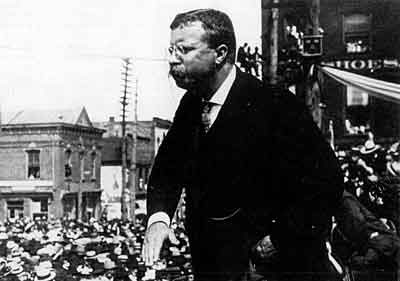
Although my blog is devoted mainly to American history focused on the Gilded Age, Progressive Era, and Environment (hence my picture of Theodore Roosevelt), I do teach Western Civilization and both halves of the U.S. survey course at a local community college. Here are two recent reads from the realm of Western Civilization:
Lars Brownsworth, Lost to the West. I wanted to bolster my knowledge of Byzantine history and turned to this book largely because I enjoyed Brownsworth’s podcast series “12 Byzantine Emperors.” Most of my knowledge of Byzantine history comes from Ostrowski’s books and some articles by other historians. As he does in his podcast, Brownsworth focuses on the emperors and empresses and provides little social history. Nor does he discuss political events outside the capital in any great detail unless it directly impacted the imperial palace. I took away four main things from this book. First, the Byzantines lived in a really tough neighborhood. Over their 1100 year history the Byzantines faced a constant stream of attack from Arabs, Bulgars, Crusaders, Goths, Hungarians, Mongols, Russians, Seljuk Turks and others before the Ottoman Turks finished them off in 1453. I found it quite remarkable they lasted as long as they did considering all this pressure. Second, there was a lot of ebb and flow. By this I mean things progressed, collapsed, and progressed again. For example, at various times Byzantines were interested in the classics and valued education and at other times they could care less. At times their economy did well and at other times it did not. In other words, while we might look at the larger trend and see Byzantine history as a steady decline since the time of Justinian, they certainly had their periods of revival. Third, how much the Byzantines considered themselves Roman. Brownsworth begins with Diocletian and reminds us that no matter what the western European historians thought, the Byzantines considered themselves Romans and not Greeks or anything else. For purposes of my Western Civ class, it means I need to make a better effort to include them in the some of my discussions. Fourth, I was surprised by the enormous impact disease had on the fortunes of the Byzantine Empire. Several times plagues devastated the Byzantine empire. Like those that ripped through the Roman Empire in the 3rd Century, the ones that struck the Byzantines hit at the worst possible moment. Being at the crossroads of Europe and Asia might have had some benefit regarding trade (at least until they contracted that out to Italian merchants) but it came at the cost of increased exposure to rapidly spreading viruses.
Edith Hamilton, The Greek Way. This is a much older book first published in 1930, but revised in the 1950s and republished in the 1990s. I struggled with her tone and writing style because she sounded to me like a bloviating windbag spouting all sorts of absolute statements, such as, “as is always the case.” Once I got used to the style, it was a little more bearable. Her basic argument is that the Greeks possessed a near perfect mixture of spirit (art for example) and the mind (intellect and science) until greed during the Age of Pericles ruined it for them. Western Civilization never recovered this balance, oscillating between periods of mind dominating the spirit and vice versa. She postulates at the end of the book that the Greeks lived during a unique time and place and their perfect balance between mind and spirit may no longer be possible. This makes them all the more valuable to study. I got lots of useful tidbits out of this book on certain personalities and how to weave together politics and philosophy. The Greeks were the original renaissance men with wide ranging interests in art, business, military affairs, and science. By Greeks Hamilton basically means Athenians. The Spartans are mentioned only in passing and in mostly unfavorable terms.
Lars Brownsworth, Lost to the West. I wanted to bolster my knowledge of Byzantine history and turned to this book largely because I enjoyed Brownsworth’s podcast series “12 Byzantine Emperors.” Most of my knowledge of Byzantine history comes from Ostrowski’s books and some articles by other historians. As he does in his podcast, Brownsworth focuses on the emperors and empresses and provides little social history. Nor does he discuss political events outside the capital in any great detail unless it directly impacted the imperial palace. I took away four main things from this book. First, the Byzantines lived in a really tough neighborhood. Over their 1100 year history the Byzantines faced a constant stream of attack from Arabs, Bulgars, Crusaders, Goths, Hungarians, Mongols, Russians, Seljuk Turks and others before the Ottoman Turks finished them off in 1453. I found it quite remarkable they lasted as long as they did considering all this pressure. Second, there was a lot of ebb and flow. By this I mean things progressed, collapsed, and progressed again. For example, at various times Byzantines were interested in the classics and valued education and at other times they could care less. At times their economy did well and at other times it did not. In other words, while we might look at the larger trend and see Byzantine history as a steady decline since the time of Justinian, they certainly had their periods of revival. Third, how much the Byzantines considered themselves Roman. Brownsworth begins with Diocletian and reminds us that no matter what the western European historians thought, the Byzantines considered themselves Romans and not Greeks or anything else. For purposes of my Western Civ class, it means I need to make a better effort to include them in the some of my discussions. Fourth, I was surprised by the enormous impact disease had on the fortunes of the Byzantine Empire. Several times plagues devastated the Byzantine empire. Like those that ripped through the Roman Empire in the 3rd Century, the ones that struck the Byzantines hit at the worst possible moment. Being at the crossroads of Europe and Asia might have had some benefit regarding trade (at least until they contracted that out to Italian merchants) but it came at the cost of increased exposure to rapidly spreading viruses.
Edith Hamilton, The Greek Way. This is a much older book first published in 1930, but revised in the 1950s and republished in the 1990s. I struggled with her tone and writing style because she sounded to me like a bloviating windbag spouting all sorts of absolute statements, such as, “as is always the case.” Once I got used to the style, it was a little more bearable. Her basic argument is that the Greeks possessed a near perfect mixture of spirit (art for example) and the mind (intellect and science) until greed during the Age of Pericles ruined it for them. Western Civilization never recovered this balance, oscillating between periods of mind dominating the spirit and vice versa. She postulates at the end of the book that the Greeks lived during a unique time and place and their perfect balance between mind and spirit may no longer be possible. This makes them all the more valuable to study. I got lots of useful tidbits out of this book on certain personalities and how to weave together politics and philosophy. The Greeks were the original renaissance men with wide ranging interests in art, business, military affairs, and science. By Greeks Hamilton basically means Athenians. The Spartans are mentioned only in passing and in mostly unfavorable terms.
Tuesday, November 23, 2010
Chester Arthur and James G. Blaine: The Conference of American States
When Chester Arthur became the twenty-first president of the United States upon the death of James A. Garfield he announced that he would retain his predecessor's cabinet. The move was part of an image makeover effort. Long regarded as a party hack with his hands in the cookie jar, Arthur had to demonstrate to the American people that he was up to the task of being president. He acted judiciously during his first few months of office and tried to display calm, conservative, competent judgement. Arthur's first public action as president was to appear at the centennial celebration of the Battle of Yorktown in October 1881. Like presidents before and after, he used a good military show and some patriotic flag waving to bolster his standing as commander-in-chief.
James G. Blaine was more than James A. Garfield's Secretary of State. He was the slain president's closest political friend, an advisor on domestic, as well as foreign matters, and major political figure in his own right. Blaine had his share of baggage, and allegations of corruption dogged him for years, but he had one of the sharpest political minds of his era and possessed an enormous store of charisma, an uncommon trait in the late nineteenth century. Blaine was an established leader of the Half Breed faction of the Republicans and long battled Senator Roscoe Conkling of New York. Arthur was a friend and ally to Conkling and belonged to the Stalwart faction of the Republican Party. As vice president Arthur supported Conkling against Garfield in a nasty patronage battle over the New York Customhouse.
Now there was an uncomfortable situation in Washington. Blaine had to work for a man he detested, but he didn't want to rock the boat and be blamed for Arthur losing any public confidence. Arthur was stuck with someone who could easily overshadow him and one he did not like to boot. Perhaps in the uncomfortable pirouette Blaine got the upper hand. In November 1881, just a week before he resigned as secretary of state, Blaine prevailed on President Arthur to invite the nations of Central and South America to a conference to be held in the United States.
Blaine would have sought this conference had Garfield lived. He was long concerned about the growth of British trade, and what we today call soft power in Latin America. It greatly bothered him that the the British had more trade in our continent than we did. A conference would solidify the relationships between each the Latin American nations and the United States. In addition, it would create a more peaceful environment -- an important objective considering there was currently one war in South America and a threat of a least one more in Central America. Peace, especially if brokered by the United States, would greatly improve trade prospects. Peace and cooperation would also reduce the possibility of any European intervention.
Although Arthur agreed to send the invitations out in November, he changed his mind in January 1882, citing as his reason a concern that such a meeting would anger the European powers. Blaine went ballistic when he heard this, he wasn't known as "Jingo Jim" for nothing. Blaine wrote a 13 page letter in the tone of the schoolmaster he used to be lecturing Arthur on the folly of his decision and the foreign policy disaster it would create. Blaine called it a "voluntary humiliation." Blaine made sure this did not remain a private dispute. He gave the letter to his friend Whitelaw Reid who published in the newspaper he edited, the New York Tribune. Arthur could not expect any help from Secretary of State Frederick Frelinghuysen who told a guest at a Washington dinner party, "Blaine may quarrel with me if he likes but I shall not with him." One imagines Frelinghuysen declining invitations from "Meet the Press", "This Week", and "Face the Nation".
Blaine wasn't the only one critical of Arthur. Diplomats criticized the president for leaving them hanging and others chimed in how weak it looked to cave in the face of imagined European opposition. Didn't they have their meetings and conferences also? It seemed a psychological violation of the Monroe Doctrine.
Arthur started to back peddle again. In April he told Congress it was their problem. He argued the situation was too tense in the Americas, but if the American people expressed a desire, through their elected representatives, then there should be a conference. When Congress did not vote on the conference by August 1882 Arthur officially withdrew the invitations, even though nine countries had already accepted.
On the one hand, this is a presidential abdication of foreign policy power that would have made any late twentieth or early twenty-first century president cringe. On the other hand, Arthur knew Congress unlikely to support the conference and it gave him the cover to wiggle out of it. Why did he want out of the conference so bad? Most likely to embarrass and discredit James G. Blaine.
James G. Blaine was more than James A. Garfield's Secretary of State. He was the slain president's closest political friend, an advisor on domestic, as well as foreign matters, and major political figure in his own right. Blaine had his share of baggage, and allegations of corruption dogged him for years, but he had one of the sharpest political minds of his era and possessed an enormous store of charisma, an uncommon trait in the late nineteenth century. Blaine was an established leader of the Half Breed faction of the Republicans and long battled Senator Roscoe Conkling of New York. Arthur was a friend and ally to Conkling and belonged to the Stalwart faction of the Republican Party. As vice president Arthur supported Conkling against Garfield in a nasty patronage battle over the New York Customhouse.
Now there was an uncomfortable situation in Washington. Blaine had to work for a man he detested, but he didn't want to rock the boat and be blamed for Arthur losing any public confidence. Arthur was stuck with someone who could easily overshadow him and one he did not like to boot. Perhaps in the uncomfortable pirouette Blaine got the upper hand. In November 1881, just a week before he resigned as secretary of state, Blaine prevailed on President Arthur to invite the nations of Central and South America to a conference to be held in the United States.
Blaine would have sought this conference had Garfield lived. He was long concerned about the growth of British trade, and what we today call soft power in Latin America. It greatly bothered him that the the British had more trade in our continent than we did. A conference would solidify the relationships between each the Latin American nations and the United States. In addition, it would create a more peaceful environment -- an important objective considering there was currently one war in South America and a threat of a least one more in Central America. Peace, especially if brokered by the United States, would greatly improve trade prospects. Peace and cooperation would also reduce the possibility of any European intervention.
Although Arthur agreed to send the invitations out in November, he changed his mind in January 1882, citing as his reason a concern that such a meeting would anger the European powers. Blaine went ballistic when he heard this, he wasn't known as "Jingo Jim" for nothing. Blaine wrote a 13 page letter in the tone of the schoolmaster he used to be lecturing Arthur on the folly of his decision and the foreign policy disaster it would create. Blaine called it a "voluntary humiliation." Blaine made sure this did not remain a private dispute. He gave the letter to his friend Whitelaw Reid who published in the newspaper he edited, the New York Tribune. Arthur could not expect any help from Secretary of State Frederick Frelinghuysen who told a guest at a Washington dinner party, "Blaine may quarrel with me if he likes but I shall not with him." One imagines Frelinghuysen declining invitations from "Meet the Press", "This Week", and "Face the Nation".
Blaine wasn't the only one critical of Arthur. Diplomats criticized the president for leaving them hanging and others chimed in how weak it looked to cave in the face of imagined European opposition. Didn't they have their meetings and conferences also? It seemed a psychological violation of the Monroe Doctrine.
Arthur started to back peddle again. In April he told Congress it was their problem. He argued the situation was too tense in the Americas, but if the American people expressed a desire, through their elected representatives, then there should be a conference. When Congress did not vote on the conference by August 1882 Arthur officially withdrew the invitations, even though nine countries had already accepted.
On the one hand, this is a presidential abdication of foreign policy power that would have made any late twentieth or early twenty-first century president cringe. On the other hand, Arthur knew Congress unlikely to support the conference and it gave him the cover to wiggle out of it. Why did he want out of the conference so bad? Most likely to embarrass and discredit James G. Blaine.
Saturday, October 30, 2010
James G. Blaine, Continental Liar from the state of Maine
Today I finished reading Neil Rolde's Continental Liar, a biography of James G. Blaine. This is not the first historical account of Blaine I have digested. Before this, I read Edward Stanwood's (1905) and David Muzzey's (1934) biographies as well as Edward Crapol's study of Blaine's terms as the nation's chief diplomat (2000). Mostly forgotten today, Blaine was one of the most popular political figures of the late 19th century. He was a school teacher and newspaper editor before becoming a Congressman, Speaker of the House, Senator, Secretary of State, failed presidential candidate (1884), and Secretary of State again.
Rolde is very good at two things. First, he does an excellent job in depicting Blaine's family life. Today we seem jaded on the subject of the family lives of our politicians. From Kennedy's philandering to the drama of the Clinton marriage we question the sincerity of their relationships. There can be no doubt Blaine loved his family and his role as father, husband, and grandfather were just as important in his life as his role as statesman. Second, Rolde, a former Maine politician himself, focuses on Blaine's role in Pine State politics, even when he was a Senator and Secretary of State.
Despite these two positive attributes, there are some negatives to Rolde's biography. He never answers the question of where Blaine got his money from. He seemed to have plenty of it, far in excess of his government pay. Was he as corrupt as his contemporaries charged? Did he benefit from wise investments? These questions are not satisfactorily answered. Second, Rolde did not seem to sift through the 7,000 items that comprise the Blaine papers in the Library of Congress. He did access a journal written by one Blaine's daughters from the Blaine papers, but nothing else. Rolde leaves some gaps in Blaine's legislative career. He covers the Reconstruction period throughly enough, but there is little else on the rest of Blaine's Congressional career. For example, where did Blaine stand on President Grant's financial legislation in the wake of the panic of 1873. Finally, I don't think he really explains Blaine's interest in reciprocity or how it connected to his larger views on expanding American power overseas.
Rolde is very good at two things. First, he does an excellent job in depicting Blaine's family life. Today we seem jaded on the subject of the family lives of our politicians. From Kennedy's philandering to the drama of the Clinton marriage we question the sincerity of their relationships. There can be no doubt Blaine loved his family and his role as father, husband, and grandfather were just as important in his life as his role as statesman. Second, Rolde, a former Maine politician himself, focuses on Blaine's role in Pine State politics, even when he was a Senator and Secretary of State.
Despite these two positive attributes, there are some negatives to Rolde's biography. He never answers the question of where Blaine got his money from. He seemed to have plenty of it, far in excess of his government pay. Was he as corrupt as his contemporaries charged? Did he benefit from wise investments? These questions are not satisfactorily answered. Second, Rolde did not seem to sift through the 7,000 items that comprise the Blaine papers in the Library of Congress. He did access a journal written by one Blaine's daughters from the Blaine papers, but nothing else. Rolde leaves some gaps in Blaine's legislative career. He covers the Reconstruction period throughly enough, but there is little else on the rest of Blaine's Congressional career. For example, where did Blaine stand on President Grant's financial legislation in the wake of the panic of 1873. Finally, I don't think he really explains Blaine's interest in reciprocity or how it connected to his larger views on expanding American power overseas.
Thursday, October 28, 2010
Out of This Furnace
Back in the late 1990s, in the days of my ABDhood, I used to hunt for syllabi for courses in the Gilded Age and Progressive Era. Many of these syllabi required or recommended Thomas Bell's Out of this Furnace. Totally unfamiliar with this title, I decided it must be fairly new and with it being so esteemed I placed it on my reading list. For some reason Out of This Furnace proved very difficult to locate. Several libraries I visited listed it in the catalog but a copy could not be found on the shelf. Two months ago to my great surprise I found a copy at Barnes and Noble. First, I have to admit I had no idea it was a fictional account of Slovak family through three generations, which is why I stared at it for a couple of minutes thinking what is this doing here? Second, I was surprised to find out that it was written in 1941.
I can't say I really enjoyed Out of This Furnace. Even though I can believe that immigrant life in the steel towns of late nineteenth and early twentieth century was as bleak as Bell depicts it, I have to think there were still moments of happiness and joyful events. What I really took away from the book as an historian is the way the different generations related to life in America. The first generation seemed content to work and isolate themselves. Coming from a fractured Austro-Hungarian Empire, it only seemed natural for them to withdraw into themselves and forego learning English or making any attempt to assimilate into the larger culture of which they remained largely suspicious. The second generation wanted to fit in, but were not welcomed. They learned English, attended schools, but were derided as "Hunkies". Conscious of otherness, they felt stuck between two worlds - wanting to be Americans but not accepted as such. Finally, the third generation demanded a piece of the pie and felt comfortable using American methods to attain it. The triumph of the third generation in winning labor reform clearly votes for FDR.
I can't say I really enjoyed Out of This Furnace. Even though I can believe that immigrant life in the steel towns of late nineteenth and early twentieth century was as bleak as Bell depicts it, I have to think there were still moments of happiness and joyful events. What I really took away from the book as an historian is the way the different generations related to life in America. The first generation seemed content to work and isolate themselves. Coming from a fractured Austro-Hungarian Empire, it only seemed natural for them to withdraw into themselves and forego learning English or making any attempt to assimilate into the larger culture of which they remained largely suspicious. The second generation wanted to fit in, but were not welcomed. They learned English, attended schools, but were derided as "Hunkies". Conscious of otherness, they felt stuck between two worlds - wanting to be Americans but not accepted as such. Finally, the third generation demanded a piece of the pie and felt comfortable using American methods to attain it. The triumph of the third generation in winning labor reform clearly votes for FDR.
Subscribe to:
Posts (Atom)